The Illusion of Ownership & The Rise of Digital Gatekeepers
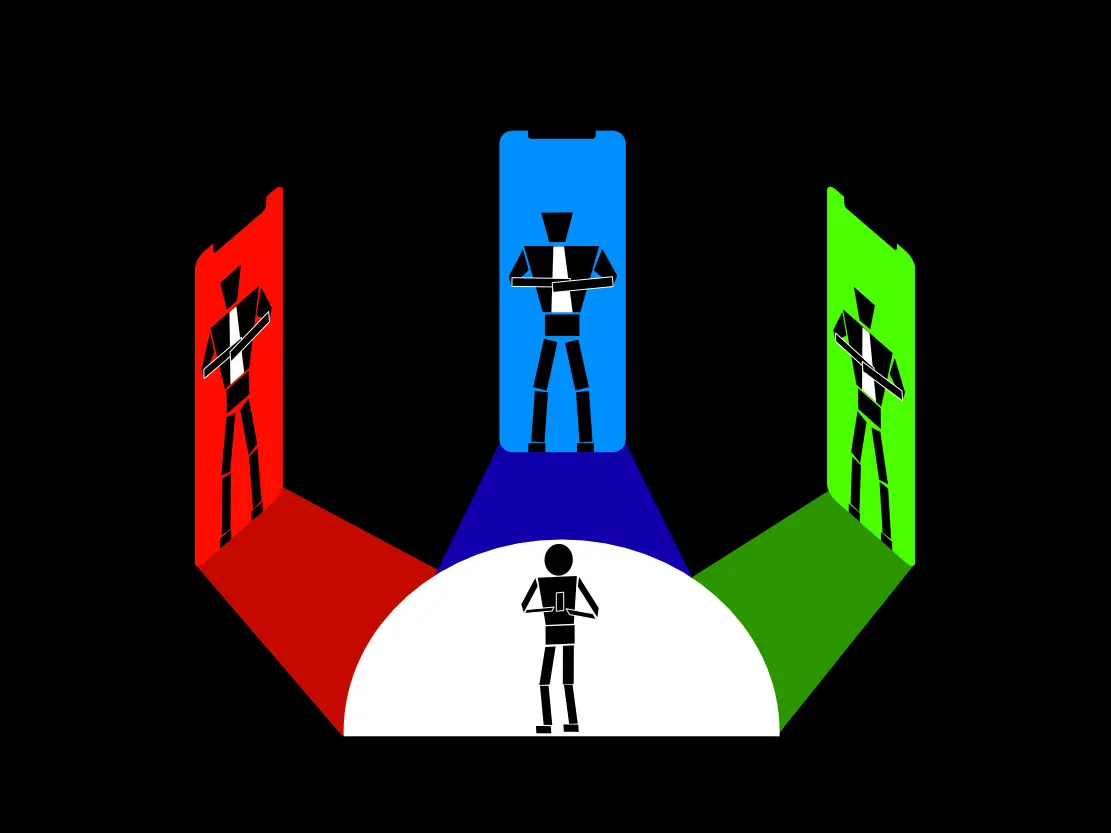
A Frictionless Future… Until It Breaks
Imagine a future of effortless, frictionless living. You reside in a ‘smart’ home where the environment anticipates your every need. With a simple “Okay Google” voice command, you can control the lighting and window blinds. A smart vacuum maintains the floors while you sleep, and an Eight Sleep mattress precisely regulates your body temperature to ensure the best sleep each night. You no longer carry physical keys or cards, because your fingerprint unlocks the door. Parked in the garage is your Tesla Model Y, which can be unlocked using a digital key on your phone. Because you’re a health freak, your vitals are tracked 24/7 by a Whoop band, for which you pay a top-tier monthly subscription. In this utopian vision, computing technology has successfully solved the hassles of daily life. You get so much of your time back that you can actively pursue things that you’re genuinely interested in. Everything is absolutely amazing, until it all goes wrong. At 2:00 a.m., an AWS server outage sends shockwaves across the world. All of a sudden, most of the cloud-dependent smart devices lose their core functionalities. Your home is affected too. Your Eight Sleep mattress stops cooling. Your smart security system freezes, and your car stops recognizing you. You realize a haunting truth of the modern computing age: even though the smart devices are in your house, their functionality lives somewhere else.
The Faustian Bargain of Convenience
The rise of subscription-based services and smart devices over the last few years has been astronomical. The convenience, statistical reliability, and agility that these services offer make them deeply embedded in our lives. However, as Postman argues, every new technology is a Faustian bargain. It gives, but it also takes. In this case, the ‘gift’ is convenience, but the ‘price’ is the loss of local control to centralized servers and tech companies. As described in the above example, all it takes is a single failure for key features to become unusable.
Delegated Sovereignty: Owning Hardware, Renting Control
This shift from local control to cloud-dependency represents a fundamental change in how we interact with the physical world. In the past, a tool’s usefulness resided within the tool itself. For example, a mechanical lock or a traditional vacuum functioned without relying on an external provider continuing to operate. Today, we are in an era of delegated sovereignty. Delegated sovereignty describes systems where the user owns the hardware, but meaningful control is exercised by a remote provider through software, authentication, and cloud services. As mentioned in the reading about the AWS outage and Eight Sleep mattresses, we are witnessing the rise of internet-dependent hardware that is effectively just an interface to access a remote server. If that server fails, the physical device loses critical functionality. This is a social problem of modern computing. We are rarely the complete owners of any product anymore.
Dependency Isn’t New, But the Failure Modes Are
It is important to note that dependency on external systems is not a new phenomenon. For several decades, homes have been powered by electricity. If there is a power outage, almost all appliances like refrigerators, dishwashers, washing machines, stoves, and lights stop working. In several developing countries, the lack of electricity is still a real issue and disrupts daily routines. However, smart, cloud-dependent devices introduce a secondary and significantly more complex point of failure. In the traditional era, once a device was powered or charged, its core functionality was largely local and available at all times. Modern smart hardware suffers from a dual-layered vulnerability. For example, an Eight Sleep mattress that is fully charged or connected to a power supply still loses its core features if the internet connection is severed. We have moved from just utility dependency to utility and infrastructure dependency.
Artificial Friction: When the Loss of Control Is by Design
An important nuance to understand is that the “loss of control” Postman warns of is not always a byproduct of a technical failure. Often, it is a feature of the software’s design. In a traditional mechanical world, a tool’s efficiency was limited only to its physical capability. In the modern computing age, software is frequently used to engineer ‘artificial friction’. Software can be used to tier access to efficiency and convenience. In an ideal world, companies would create a premium tier to offer services that cater to a niche audience willing to pay extra. In practice, though, most platforms increasingly monetize the user experience. Baseline services stagnate while paid tiers preserve the smoother experience. This dynamic resembles what Cory Doctorow describes as ‘enshittification’, where platforms become less user-serving as monetization pressures grow.
Platforms, Priority Queues, and Paywalls
Consider the ecosystem of delivery apps like UberEats and Amazon. The underlying infrastructure can allocate speed and convenience differently across users, as proven by their first few years in business. Yet, as companies grow larger, they often withhold their peak efficiency. UberEats places non-paying members in a queue and charges a ‘priority’ fee to explicitly change service ordering.
The root of such behaviour lies in what economists call the ‘Network Effect.’ The value of platform businesses increases non-linearly with the number of users they attract. Once a company secures this dominance, it becomes harder to displace it. This monopoly-like power enables companies to engineer artificial friction. The goal becomes converting as many users to paid members, effectively downgrading the quality of services offered and creating paywalls.
The BMW Heated Seats Backlash: A Rare Win for Ownership
An example to drive this idea home is the controversy BMW found itself in when it announced a subscription model for heated seats in 2023. The cars were physically manufactured with the heating coils, but the software acted as a digital gatekeeper, requiring drivers to pay a monthly fee to unlock a feature that they already owned. This move transformed the car from a personal possession into a service that could be managed at will. Fortunately, the social backlash was swift and severe. Customers viewed this as a violation of the sanctity of ownership. As a result, BMW was forced to drop the subscription within a few weeks. This reversal serves as a rare victory for software sovereignty, proving that while technology can enforce artificial friction, the social value we place on true ownership still carries significant weight.
When Products Die Because Servers Do
The social implications of this shift extend beyond individual frustration. The outward shift of control away from consumers means that tech companies that make products have the power to move on from a product or a version, making it effectively obsolete. A product’s ‘end of life’ is no longer determined by the user or the hardware’s condition, but by a corporate balance sheet. When a company ends support, shuts down cloud services, or goes bankrupt, perfectly functional hardware loses critical functionality overnight.
A suitable example is Insteon, a home-automation company whose servers went offline in April 2022 without warning. Soon, Insteon quietly shut down. Overnight, many users lost app- and cloud-based control of their devices, and some setups became effectively ‘bricked.’ While a few devices retained limited local control, most users were pushed into buying entirely new systems.
A Local-First Future
The smart revolution was marketed as a path to increased freedom, which is true for the most part. But as Postman argues, technological change always involves tradeoffs. Smart devices trade local sovereignty for cloud-based computation. Subscription-based services trade the stability of a one-time purchase for the risk of digital gatekeeping. As computer literate consumers in 2026, we must know more than just navigating interfaces. We must also have an understanding of the infrastructure that powers the devices around us. We must be aware of the pros and cons of choosing one technology over the other. We must demand local-first alternatives where core functionality works offline, and the ‘smart’ features should be an add-on instead of the MVP.