The Role of a Project Manager: Responsibilities, Skills, and the Impact of AI
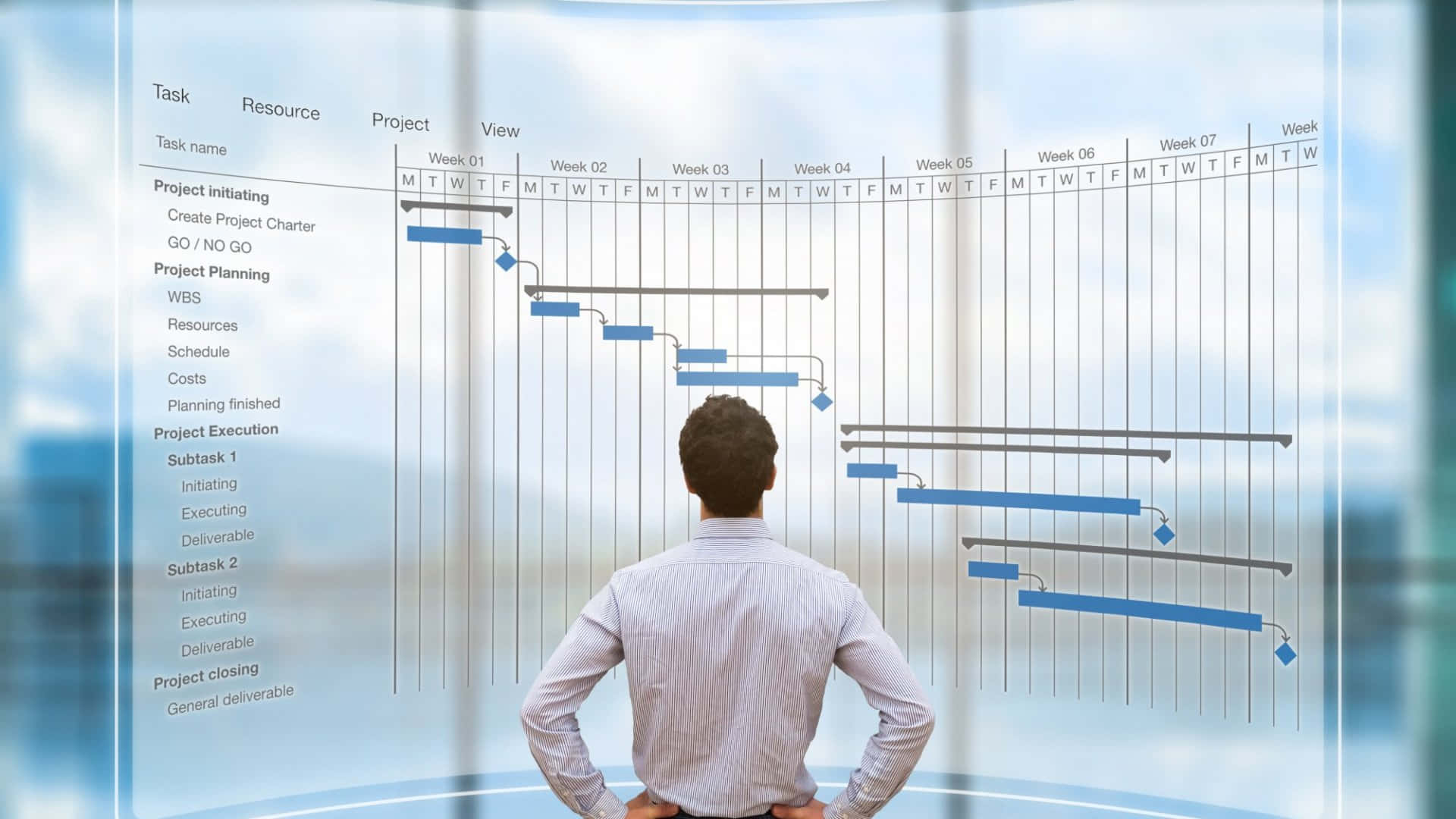
Project managers (PMs) serve as the linchpin that transforms organizational strategy into tangible outcomes. In the broadest sense, PMs are responsible for planning, organizing, and directing the completion of specific projects for an organization while ensuring that the projects are on time, within budget, and within scope. The exact duties of a project manager depend on the industry, organization, and the types of projects a PM is tasked with overseeing. But across the board, all PMs share responsibilities across what's commonly referred to as the "project life cycle."
This cycle consists of five phases: initiating, planning, executing, monitoring and controlling, and closing. In the initiating phase, PMs meet the stakeholders and management to ensure that the objectives are crystal-clear and aligned with business needs. In the planning phase, they decompose deliverables, develop realistic schedules and budgets, and build comprehensive risk registers. In the executing phase, PMs coordinate cross-functional teams and vendors, resolve resource conflicts, and maintain momentum via regular status updates and demos. In the monitoring phase, they compare actual versus planned performance, analyze variances, and implement corrective actions. Finally, in the closing phase, PMs validate deliverables against acceptance criteria, conduct retrospectives to capture lessons learned, and ensure administrative wrap-up.
Technical Knowledge vs. Leadership
A project manager does not need to have the extent of technical expertise as a developer or engineer. However, it is important that the PM is able to speak and discuss intelligently about the technology involved in the project. They should be able to explain to the stakeholders or management about the course of action. Additionally, they may also have to make decisions based on reports from technical experts. In order to weigh technical options, it is important that PMs have enough technical knowledge. On the other hand, it is important to keep in mind that the primary responsibility of a PM is to lead their team, and not to be the single point of contact for technical issues.
Customer Advocacy
Another important role that a PM performs is customer advocacy. The best PMs make it a point to get into the head of the target audience. It's their job to understand and advocate for the customer point-of-view when they're in meetings with the client. A part of the roles of the PM is dealing with feedback from customers. It is important for a PM to foster a customer support culture within the team, making sure that customers are heard.
It is also about striking the right balance. A PM should not be swayed by a minority of negative reviews, but also should not ignore negative comments if they're a good indicator of overall customer happiness. Reaching out to customers to take their feedback and experience is a common way of understanding public perception about a product. Another common way is through session replays. A session replay is the reproduction of a user's interactions on a website exactly how the user experienced it. It includes logged user events, such as mouse movements, clicks, page visits, etc. If users are facing issues, PMs can use session replays to understand if it's just a single user having an issue or a larger, multi-user problem.
PM vs. CEO vs. CTO
Understanding the distinction between the roles and responsibilities of a product manager, CEO, and CTO can be quite tricky. In the corporate ecosystem, the CEO, the CTO and the PM often share the same goals, but their roles, mindsets, and responsibilities differ greatly.
The CEO (Chief Executive Officer) is a visionary who sets the strategic direction of the entire organization. On the other hand, a project manager is the executor of the strategy — PMs break down the bigger goals into actionable, trackable projects and make sure they get delivered in time and with the available budget. A CEO makes high-level decisions about growth, partnerships, funding, mergers, and long-term innovation. PMs make day-to-day operational decisions and are focused more on short-term execution.
The CTO (Chief Technology Officer) is responsible for developing the company's technological strategy and seeing it through while keeping relevant business goals in mind. They also provide internal tech advice and oversight for product development and engineering. They keep an eye on the big picture and align the company's tech practices with its broader business goals, coordinating work on individual projects and ensuring that employees have what they need to get projects done on time.
The Impact of AI on Project Management
Artificial Intelligence (AI) has disrupted several domains and jobs over the last few years. The project manager's job has been impacted by AI in mainly three ways.
Firstly, AI enables PMs to improve project selection and prioritization. At its core, these activities are all about predictions — which projects will bring the most value to the organization? When the correct data is available, ML can detect patterns and can vastly exceed human accuracy in making predictions.
Secondly, AI is improving and quickening processes like project definition, planning, and reporting. New applications use big data and ML to help leaders and PMs to anticipate risks that might otherwise go unnoticed.
Third is the rise of virtual project assistants. In project management, AI tools like ChatGPT will power "bots" or "virtual assistants." Oracle recently announced a new project management digital assistant, which provides instant status updates and helps users update time and task progress via text, voice or chat.
The PM of the Future
For many PMs, automating a significant part of their current tasks may feel scary, but successful ones will learn to use these tools to their advantage. PMs will not be going away, but they will need to embrace these changes and take advantage of the new technologies. We currently think of cross-functional project teams as a group of individuals, but we may soon think of them as a group of humans and robots.
With a shift away from administrative work, a PM of the future will need to cultivate strong soft skills, leadership capabilities, strategic thinking, and business acumen. They must focus on the delivery of the expected benefits and their alignment with strategic goals. They will also need a good understanding of these technologies.